Sunday, October 13, 2024

Lama Temple

 Lama Temple is Beijing's principal and largest Buddhist Temple. It was built in 1694, as part of the city wall for Emperor Yongzheng, before he ascended the throne in 1722. 


Yongzheng’s son -- Emperor Qianlong -- sent for 300 Tibetan monks and 200 Chinese students and housed them in the palace in 1744. From then on, the dwelling served as a temple and monastery.  Lama Temple is considered one of the greatest centers of Buddhism outside of Tibet.

Burning incense and bowing is a big part of Buddhist culture.

Photographing Buddha is not permitted, so I photographed parts of the temple interior in front of the golden Buddha statues.

Saturday, October 12, 2024

Summer Palace

 The Summer Palace is a complex of palaces and gardens set in multiple lakes in Beijing.  The first stage of construction on the Summer Palace building was commissioned in 1750 by the emperor Qianlong—the fourth emperor of the Qing (Manchu) dynasty—as a gift for his mother. It was completed in 1764.


The Qinjan marble boat dates back to 1755.  An advisor told the emperor that "the waters that float the boat can also capsize it," implying that the Chinese people can not only support an emperor, but can also topple him.  So, the emperor had a very substantial boat built as a sign of stability.


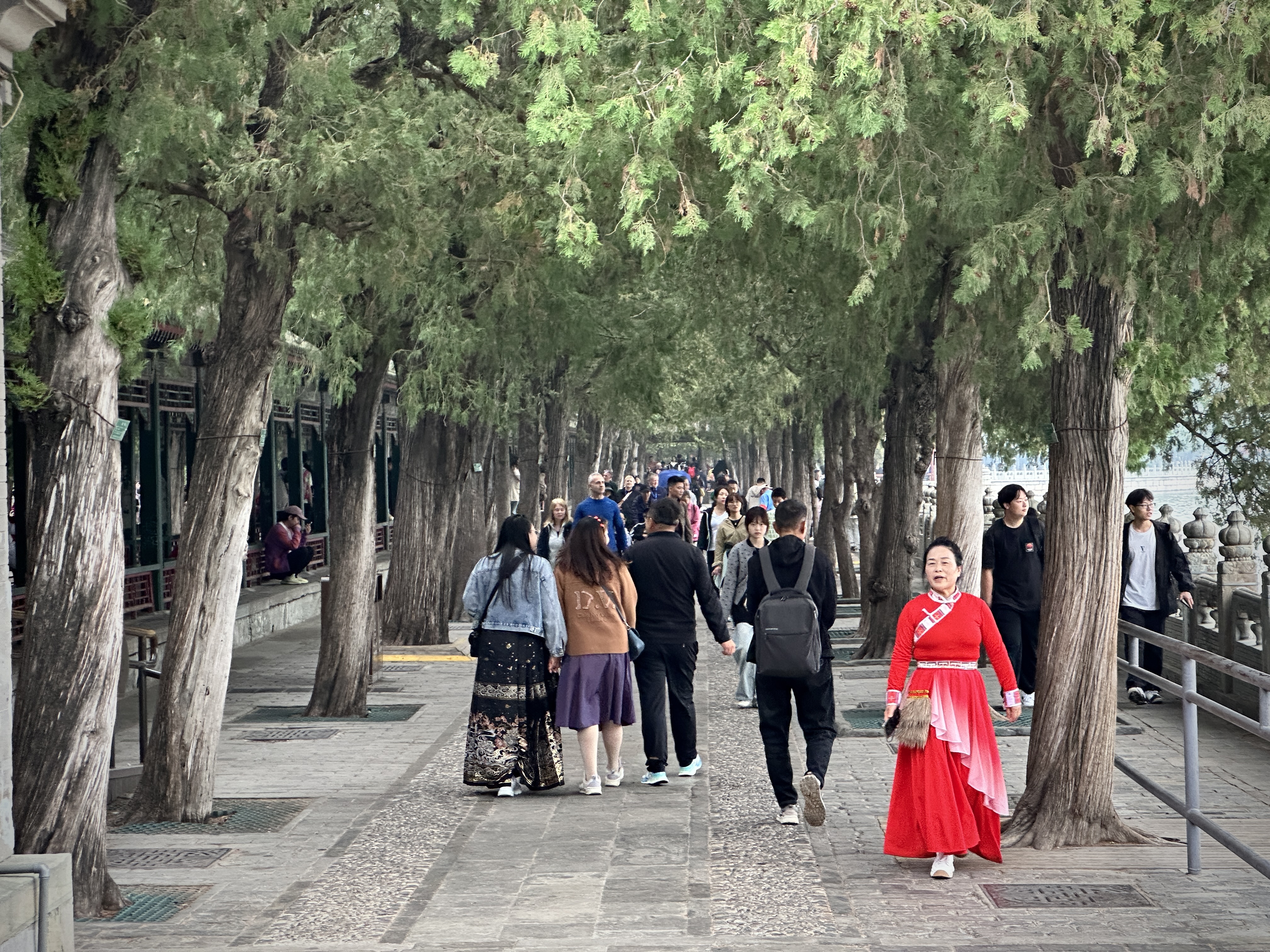
We were there during a national holiday week, when many Chinese came in from the provinces to see Beijing, perhaps for the first time.  Some, like this woman, wore clothing typical of the provinces.


We were told that this long corridor is in the Guinness Book of Records as the place with the most paintings.  (Perhaps an exaggeration.) 


The Summer Palace itself is off limits to visitors.  It is visible here from the long corridor.


We took a boat trip to a small island in the biggest lake.


We weren't alone.  Many people enjoyed the day in boats.

Friday, October 11, 2024

The Forbidden City

The Forbidden City is the imperial palace complex in Beijing. It was the residence of 24 Ming and Qing dynasty Emperors, and the center of political power in China for over 500 years from 1420 to 1924.  For centuries only the imperial family and their entourage were permitted to enter, but now it is one of China's most important tourist attractions.

Like Tiananmen Square immediately south of the Forbidden City, it can feel very crowded at first.  But, it is such a big space, with multiple courtyards, that it doesn't feel crowded once one moves further along.


The Forbidden City has many buildings, more than I can remember.  I will just show a selection.


Like other tourist spots in China, many young women wore lovely traditional dresses and headwear.  They are there to be photographed for social media by their companions, but most didn't mind being photographed by a harmless appearing old man.


Thursday, October 10, 2024

Tiananmen Square

 Tiananmen Square is massive and crowded.

This colorful basket of fake flowers is not a permanent installation.  It was a holiday week.  Beijing had floral displays all over the city, including in Tiananmen Square.


Tiananmen Gate is at the northern end of the square.  It separates the Forbidden City from Tiananmen Square.


Wednesday, October 9, 2024

Sacred Way

From 1420 to 1644, thirteen Ming Dynasty emperors built mausoleums in mountains outside Beijing.  Collectively they are called the Ming Tombs.  We didn't visit the tombs themselves, only three of which are open to the public.  But we did visit a long walkway -- the Sacred Way -- that leads to the first tomb.


We entered through a gate with red walls and yellow tiled roof.


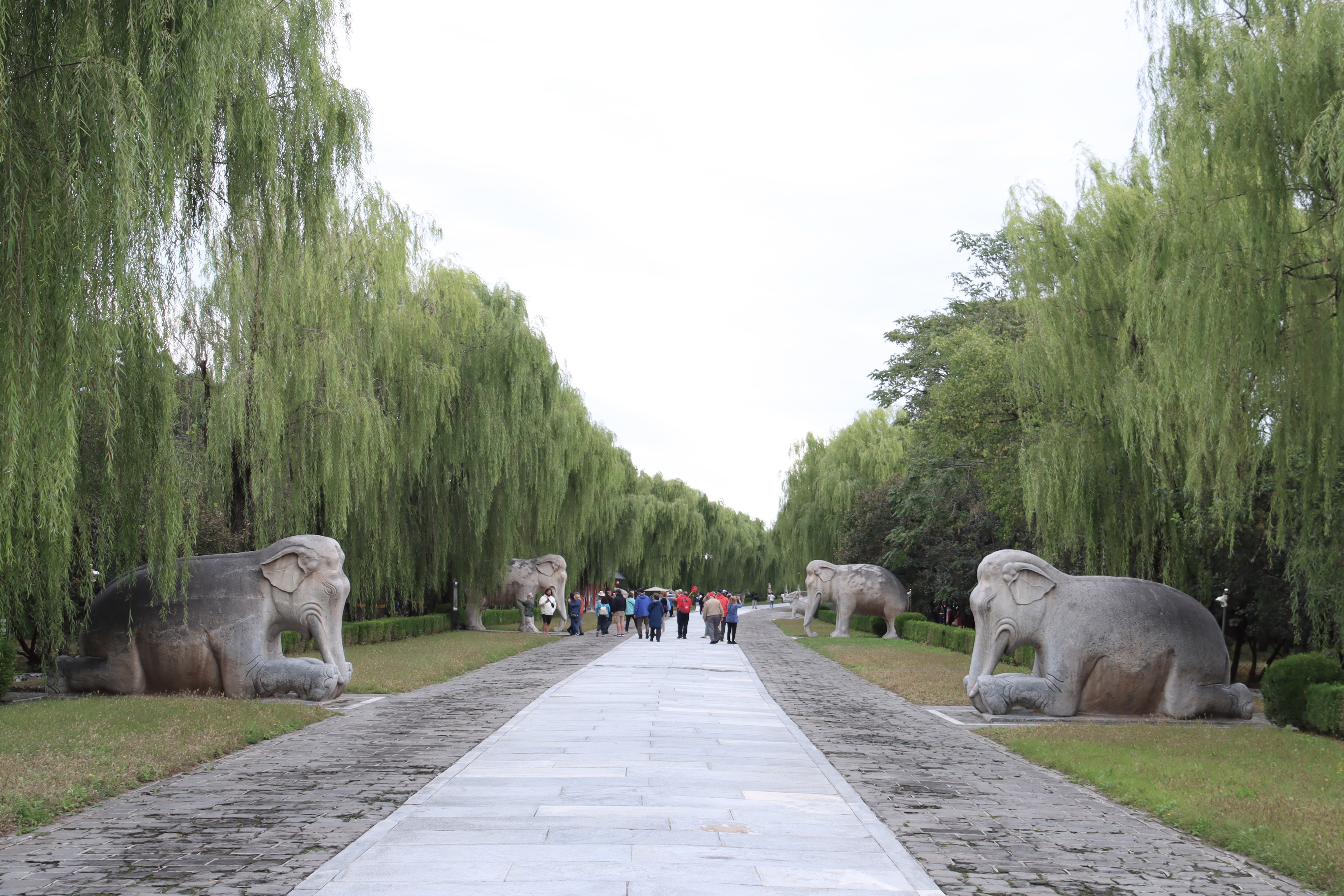
We then walked through parkland lined with willow trees and evenly spaced statues.  


The first 24 statues are pairs of animals, from horses to elephants to camels to dragons, etc.


After the animals, there are 12 paired statues of men.

At the far end we exited through a handsome gate.  

The Sacred Way is a serene walk past impressive statues amidst greenery.

Tuesday, October 8, 2024

The Great Wall of China


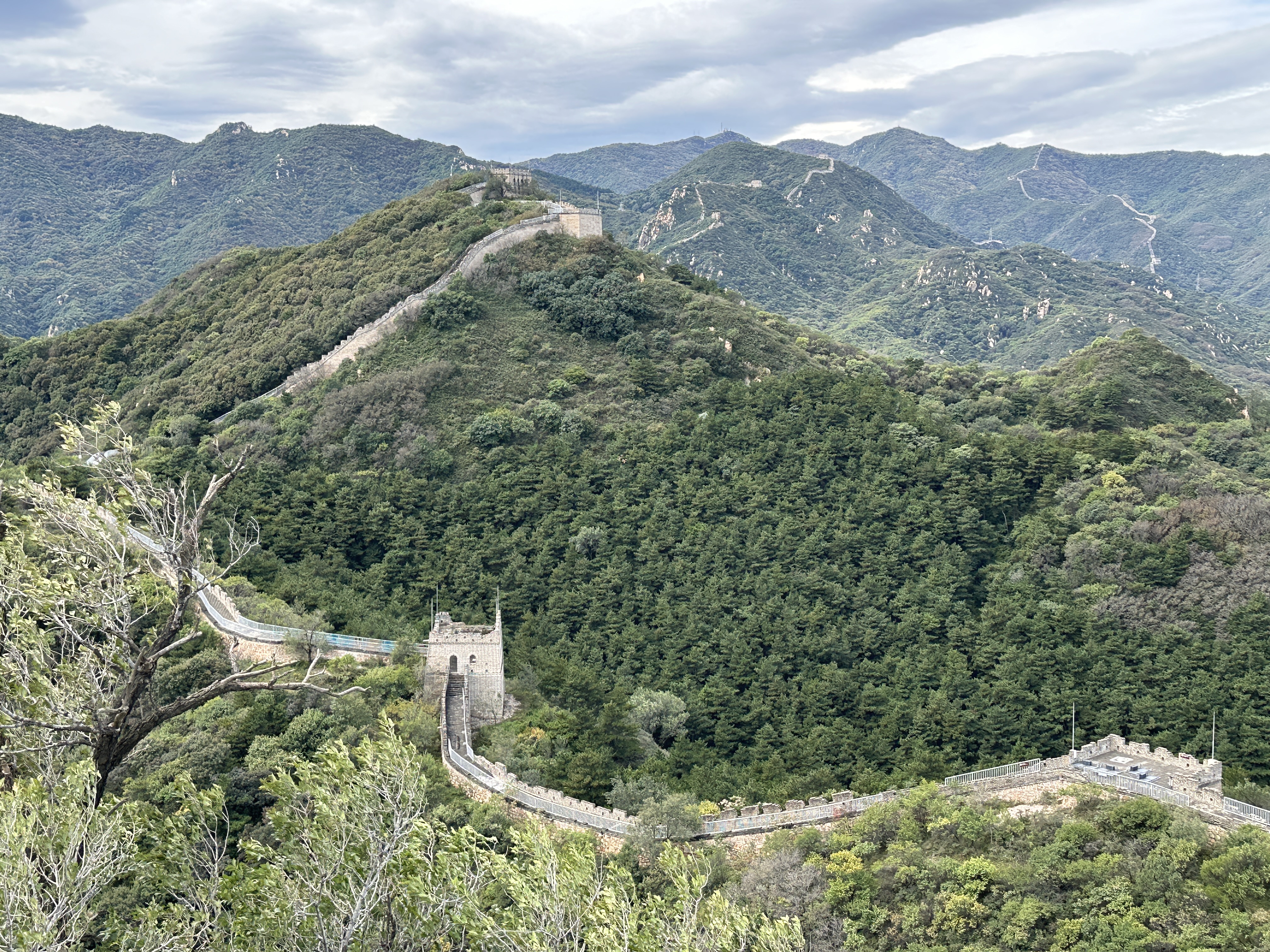
You can't go to Beijing without visiting the Great Wall of China.  It was begun in the 7th century and is placed along what was then the northern border of China.  This area is very mountainous and steep.  We visited the Badaling section of the wall and accessed it by a funicular ride. 


I will never be there again, so I walked all of the segments that were open to us.  That involved some heavy breathing and muscle aches.


We went in one direction, which was not crowded.  Busloads of Chinese tourists went in the opposite direction, reachable only by foot and without the cost of a funicular.  That section was extremely crowded.  It was one more illustration of the way the world works for the haves and for the have nots. 


A cluster of shops and statues is outside the wall.